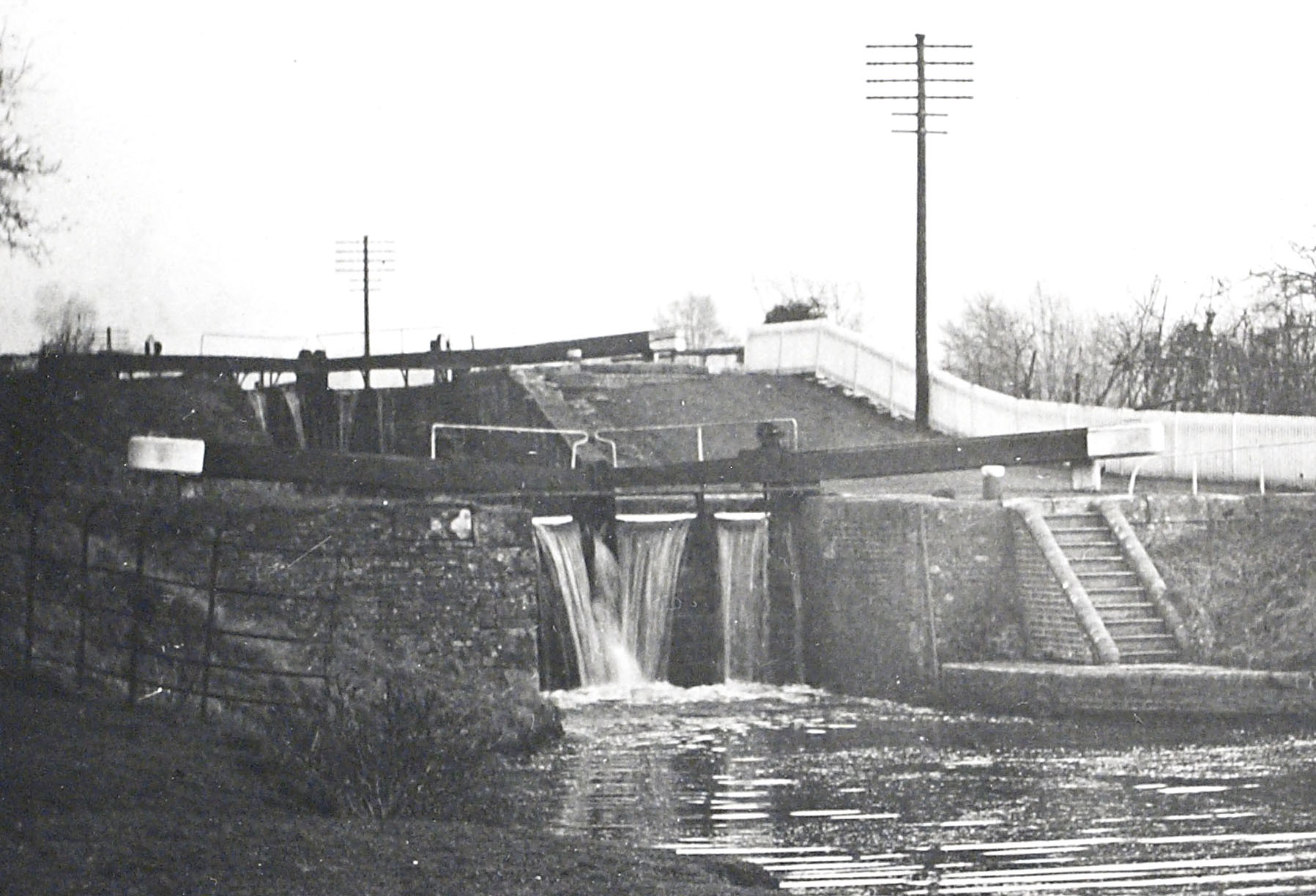
To the east of Ryeford is Double Lock, which has two chambers sharing a middle pair of gates. Because the existing contractors were not prepared to take responsibility for building such a complex structure, the Committee was relieved in January 1779 to accept an offer from local architect Anthony Keck, a member of the Committee. He agreed to build the structure for a fixed price, and the work went ahead.
Unfortunately, soon after the canal opened, it was found that one of the lock walls was 'coming in' due to pressure in the bank behind. The Committee demanded that Anthony Keck put the matter right, but Keck argued that the problem was due to bad workmanship, for which he was not responsible. At a trial at Gloucester Assizes in March 1781, a clever lawyer persuaded a jury to back the Company, but later discussions questioned whether it was really fair to expect Keck to repair the lock ‘for ever’. Eventually, in 1789, the Committee called in Josiah Clowes to put the lock ‘in as good repair as can be in its existing form’. He installed three brick cylinders in the lock wall to relieve the pressure from the bank behind, and this served well for many years.
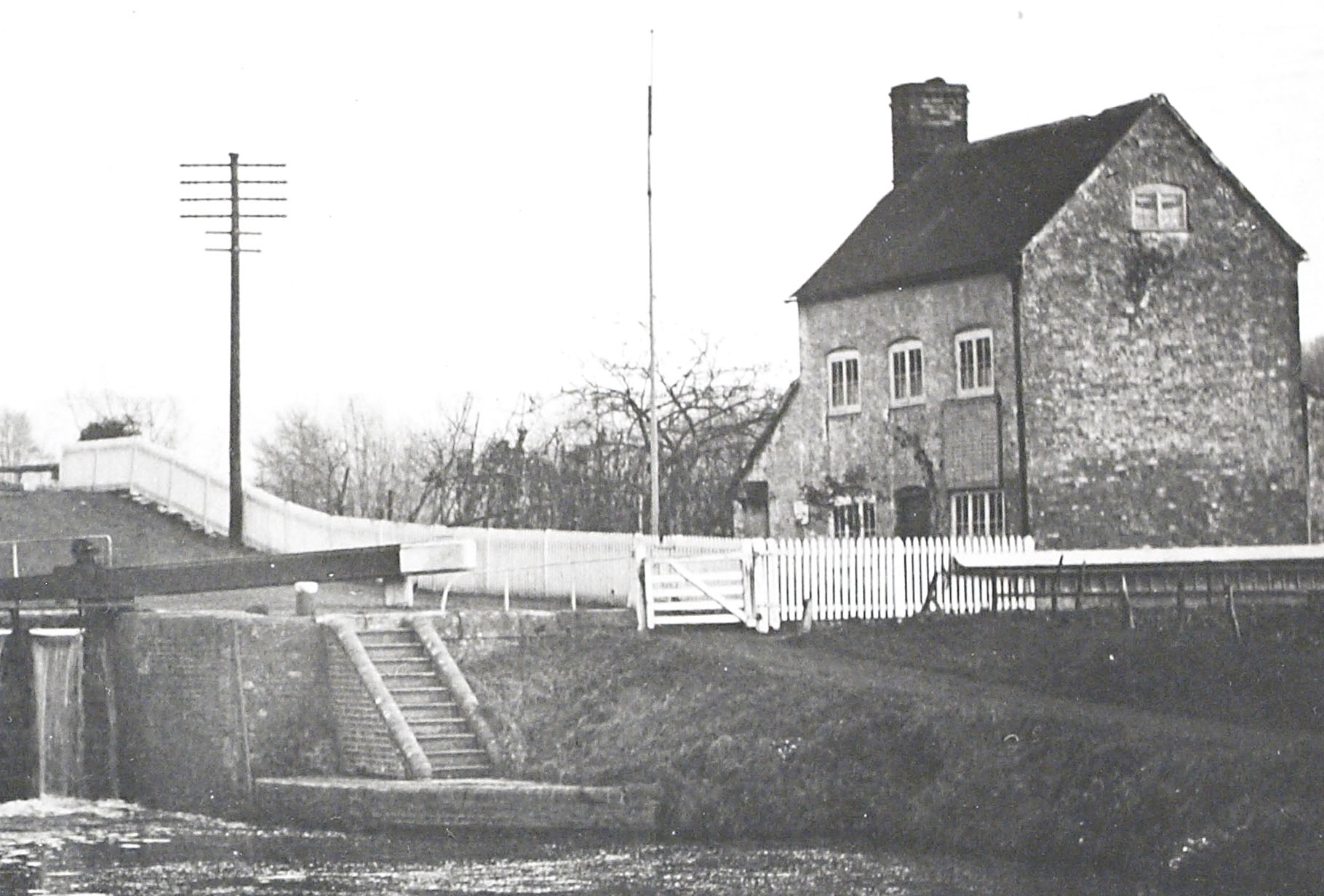
Adjoining the lock is a cottage for a lock keeper, built in 1784 and little altered - it has never had proper road access. Under the upper-right window, a board of rules for passing the locks is just visible.
Each lock keeper was responsible for one or more locks and an associated length of towpath, and they were also required to join in any other maintenance work along the canal when needed. Working a vessel through the locks was done by members of the vessel's crew.
Tragedy struck the Burbidge family when they were living here in November 1838. Four young children aged between two and nine died within a few days of one another and were buried at Cainscross. There were many serious childhood illnesses around at that time, and it seems that even such an awful event as four deaths did not warrant any notice in the local newspaper. However, the Stroudwater Committee did notice, and they ordered 'that our servant John Burbidge be paid £10 above what is due to him for salary'.
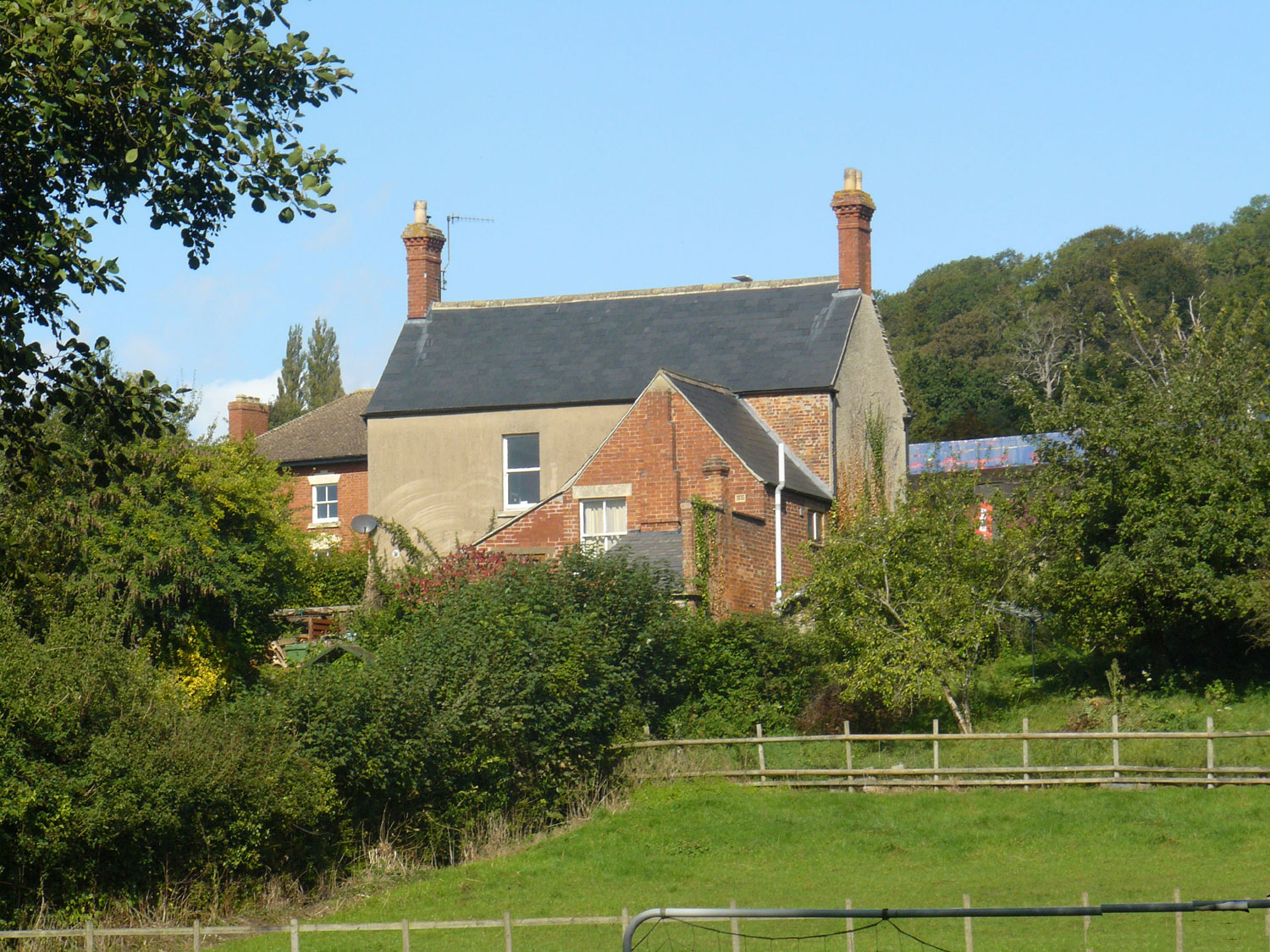
From the towpath below Double Lock can be seen the former Haywardsfield Inn, which was known by locals as ‘Nowhere’. This name had come about because in ancient times the land associated with the building was classed as ‘extra-parochial’ – not belonging to any parish.
This anomaly was corrected in 1884 when it was amalgamated into Stonehouse parish, but the old name was remembered because when a man arriving home late was asked by his wife where he had been, he could honestly answer ‘nowhere’.
Dispute concerning the building of Double Lock recorded in minute books D1180/1/1 & 2.
Deaths of four children were recorded in the Cainscross parish register.
Payment to John Burbidge recorded in D1180/1/4 p158.
Amalgamation of Hawardsfield into Stonehouse recorded in 1891 Census returns.